
Debate, Decisions and Democracy: Bringing the Constitutional Convention to Life at PHS
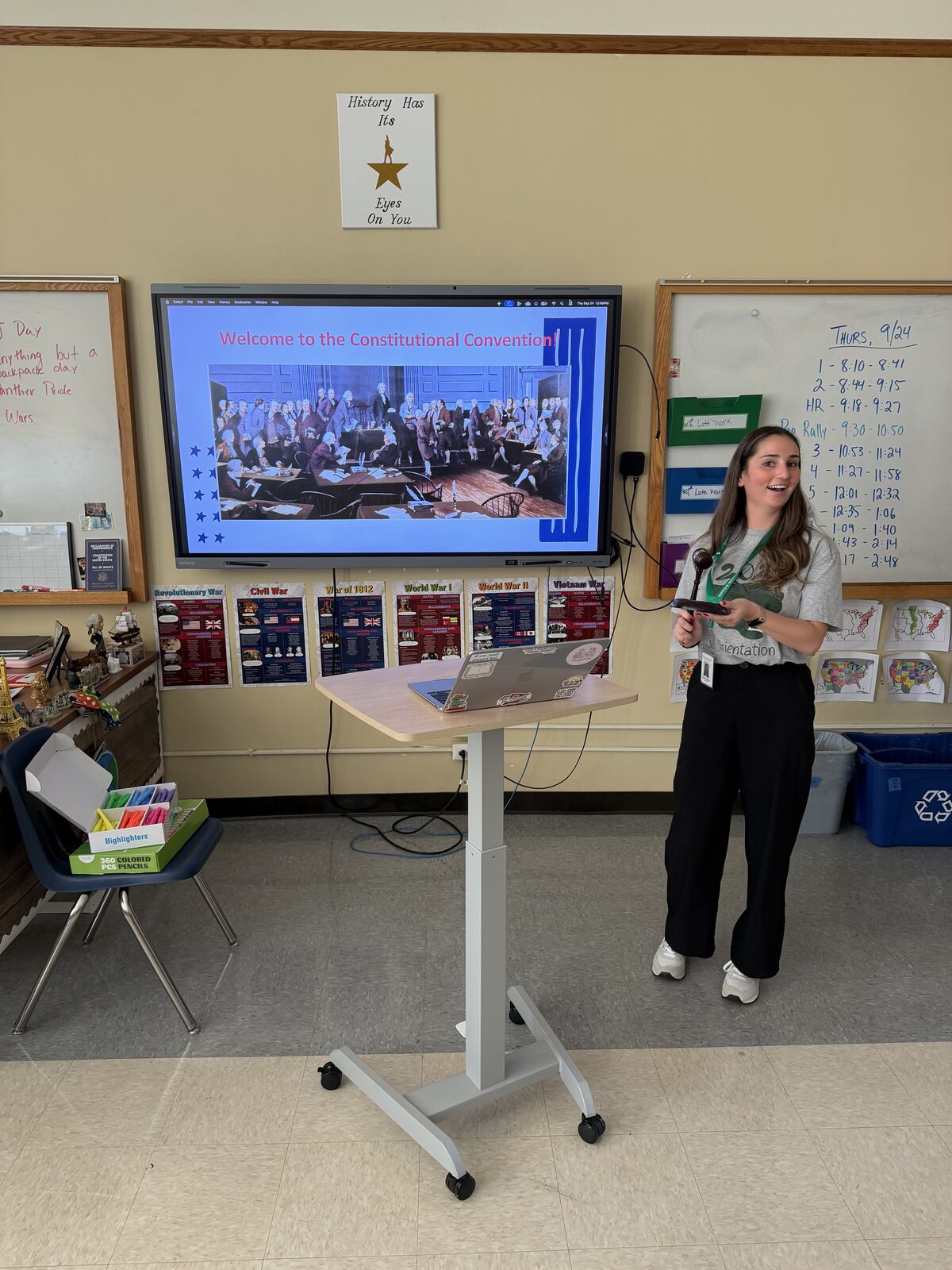 The Constitutional Convention of 1787 was anything but quiet. Delegates debated, disagreed, negotiated and compromised as they wrestled with fundamental questions about how a new nation should govern itself.More than two centuries later, students in Ms. Rebecca Graham’s class at Pleasantville High School were doing much the same.
After studying the weaknesses of the Articles of Confederation, students were assigned perspectives representing the interests and concerns of the newly formed states and conducted research in preparation for a mock Constitutional Convention. Then they “entered” Constitution Hall, where technology enabled learning to shift from studying history to actively engaging with it.
Students debated issues, listened to competing viewpoints and considered how their decisions might affect the states and the nation they were trying to build. An app developed by Ms. Graham, with support from Social Studies Department Chair George LaMar, guided them through an interactive Convention simulation, presenting students with choices and asking them to reason through issues including representation, economic development, the institution of slavery, and the roles and powers of the executive, legislative and judicial branches.
The app reflects a broader PHS priority this year: using technology more thoughtfully and purposefully to enhance teaching and learning. Led by Director of Technology Michael Sammartano, faculty began the year with training on reimagining lessons through instructional technology, including how to use AI to create tools tailored to their own learning goals. The PHS Technology Department also established a shared space where teachers can contribute their apps and draw on those created by colleagues.
This approach provides a more controlled environment for the use of AI-generated tools. The apps do not interface with the open web or collect student data, allowing teachers to explore new instructional possibilities while maintaining important safeguards around student use. New to PHS this year, Ms. Graham saw an opportunity to put that training into practice by reimagining the mock Convention as a more interactive, engaging and informative experience.
Throughout the simulation, discussion and collaboration remained central to the lesson. Students had to explain their thinking, respond to classmates, weigh competing priorities and, at times, reconsider their positions. Much like the actual Convention, the exercise required students with different interests and perspectives to talk through difficult questions and determine a path forward.
At the conclusion of the simulation, the app provided students with a score showing how their decisions compared with those made by the Founders. The group that came closest achieved 70% accuracy to the actual Constitution — underscoring just how difficult the process of reaching agreement could be. Those students identified representation in Congress as the most difficult compromise they had to make.
The results became another part of the learning. Students reflected on their choices, compared outcomes with classmates and discussed why they had made particular decisions.
“Our goal was to move students beyond simply learning about the Constitution to actually experiencing the challenges of creating one,” said Ms. Graham. “Watching them debate, compromise, defend their ideas, and reconsider their positions proved that some of the most meaningful learning happens when students have the opportunity to actively engage with history themselves.”
The experience gave students a different way to study the Constitution, one built around participation rather than observation. By researching, debating, collaborating, making choices and reflecting on the results, students strengthened their understanding of the Constitution while also practicing critical thinking and effective communication.
And in a lesson about a document born from vigorous discussion and debate, there was plenty of both.